How to Slow Down Without Feeling Like You’re Falling Behind
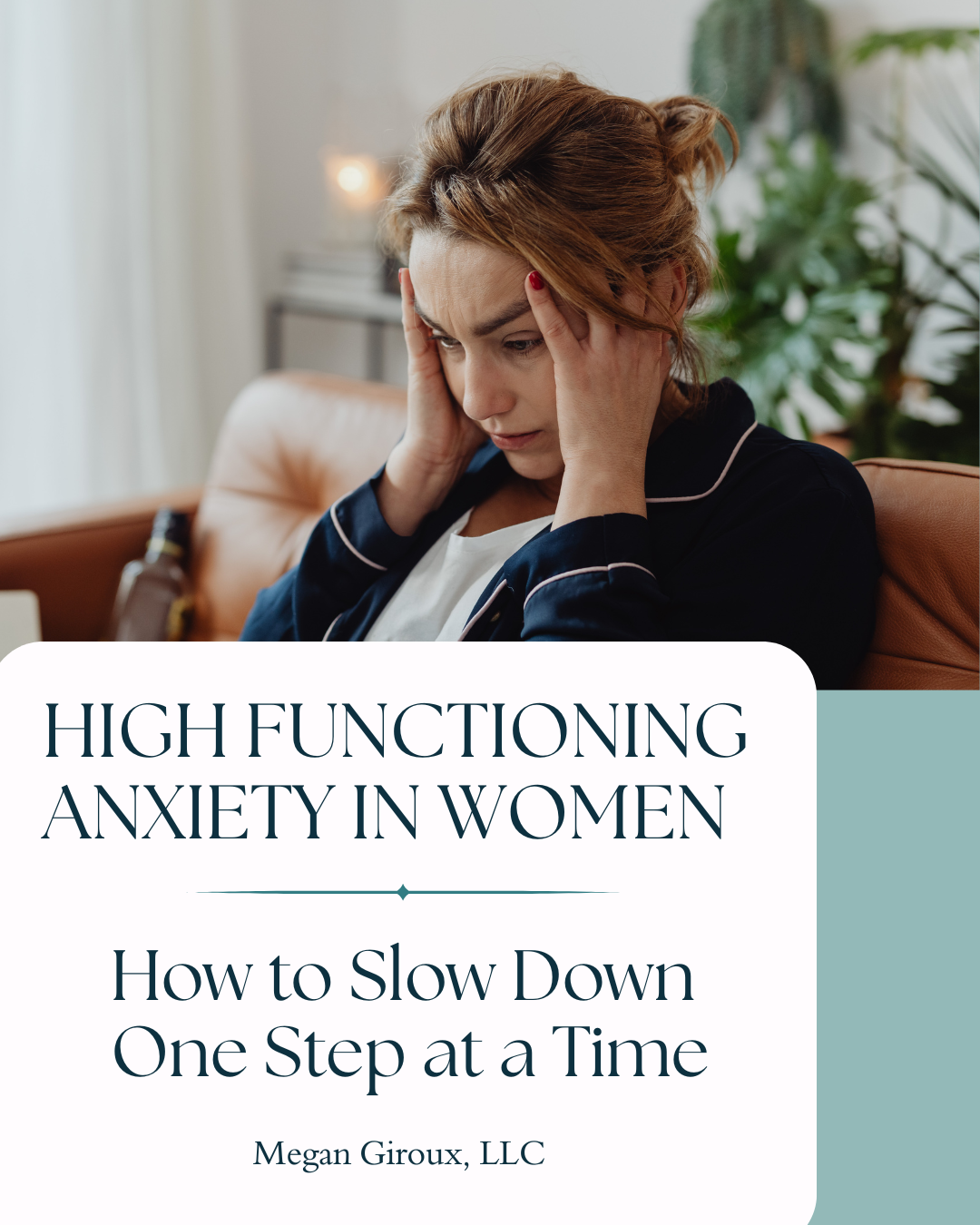
Slowing down sounds simple.
In theory, it is what you need. You know you are overwhelmed. You know the pace you are keeping is not sustainable. You know something needs to change.
But when you actually try to slow down, it does not feel good.
It feels uncomfortable. It feels unfamiliar. It can even feel like you are doing something wrong.
Instead of relief, you feel pressure. You start thinking about what is not getting done. You wonder if you are falling behind or letting something slip.
So you go back to what you know. You pick the pace back up. You push through.
If this sounds familiar, you are not alone.
For many women with high-functioning anxiety, slowing down is not just about doing less. It is about changing patterns that have been in place for a long time.
If you are starting to see how this connects to your experience, you can read more about high-functioning anxiety in women and why it can feel like you have to hold everything together.
Why Slowing Down Feels So Hard
Slowing down is not just a behavior change. It is an emotional shift.
When you are used to operating at a high level, your pace becomes part of how you manage your life. It keeps things organized. It keeps things moving. It helps you feel in control.
When you slow down, all of that changes.
You may notice:
A feeling that you should be doing something
Anxiety about what is not getting done
Discomfort with having less structure
Worry about how others will respond
There is often a belief underneath that slowing down means you are falling behind.
But what is actually happening is that you are stepping out of a pattern your mind and body are used to.
The Fear of Falling Behind
One of the biggest barriers to slowing down is the fear of what it means.
You may worry that:
You will miss something important
Things will fall through the cracks
Other people will not step up
You will be seen differently
There can also be a deeper fear that slowing down means you are not capable in the same way you thought you were.
Many women I work with hold an unspoken belief that they should be able to handle everything. That needing rest means something is wrong.
This belief keeps you pushing, even when you are exhausted.
Why Doing Less Feels More Stressful at First
It can feel confusing when slowing down makes you feel more anxious instead of less.
This is because your system is used to being in motion.
When you are constantly doing, your mind stays focused on tasks. It gives you a sense of direction and control.
When you stop, there is space.
And in that space, you may notice thoughts and feelings that were easier to ignore when you were busy.
You may also notice how much you have been carrying.
This is why slowing down often feels harder before it feels better.
If you relate to this, you may also connect with the experience of not being able to relax, even when nothing is wrong.
The Role of Overfunctioning
For many women, slowing down also means doing less for other people.
This is where it can feel especially uncomfortable.
If you are used to anticipating needs, stepping in, and handling things without being asked, doing less can feel like you are letting people down.
You may find yourself thinking:
It is just easier if I do it
I do not want to have to explain it
I do not want to create tension
I should be able to handle this
This is where overfunctioning keeps the cycle going.
The more you do, the more others rely on you. The more they rely on you, the harder it feels to step back.
Over time, this can lead to resentment. You may feel frustrated that you are carrying so much, even though part of you feels like you cannot stop.
If that resonates, you can read more about why resentment builds and what it is trying to tell you.
What Actually Helps You Slow Down
Slowing down is not about suddenly changing everything.
It is about small, intentional shifts that help you build a different way of functioning.
The first step is awareness.
Noticing when you are pushing yourself. Noticing when you are taking on something that is not yours. Noticing the urge to keep going even when you are tired.
From there, it becomes about making small changes.
That might look like:
Pausing before automatically saying yes
Letting something be good enough instead of perfect
Allowing someone else to handle something, even if they do it differently
Taking a break without filling it with productivity
These shifts may feel uncomfortable at first. That does not mean they are wrong.
It means you are doing something different.
Learning to Trust That Things Can Still Work
One of the biggest shifts is learning that things do not fall apart when you are not holding everything together.
This takes time.
It involves allowing space for others to step in. It involves tolerating the discomfort of not controlling every outcome.
It also involves recognizing that your value is not based on how much you do.
You can still be capable, reliable, and successful without carrying everything on your own.
A More Sustainable Way of Functioning
Slowing down does not mean becoming less driven or less capable.
It means creating a way of functioning that is sustainable.
Instead of being driven by pressure and fear, you begin to make decisions from a more grounded place.
You become more aware of your own needs. You start to factor yourself into your life in a way that you may not have before.
From that place, your relationships can feel more balanced. Your work can feel more intentional. Your life can feel more like something you are part of, not something you are managing.
Conclusion
If slowing down feels difficult, it does not mean you are doing something wrong.
It often means you have been operating in a way that has worked for a long time, even if it has come at a cost.
Change does not happen all at once.
It happens through small shifts, increased awareness, and a willingness to do things differently, even when it feels uncomfortable at first.
You do not have to keep pushing at a pace that leaves you feeling overwhelmed and disconnected.