Signs of High-Functioning Anxiety in Women
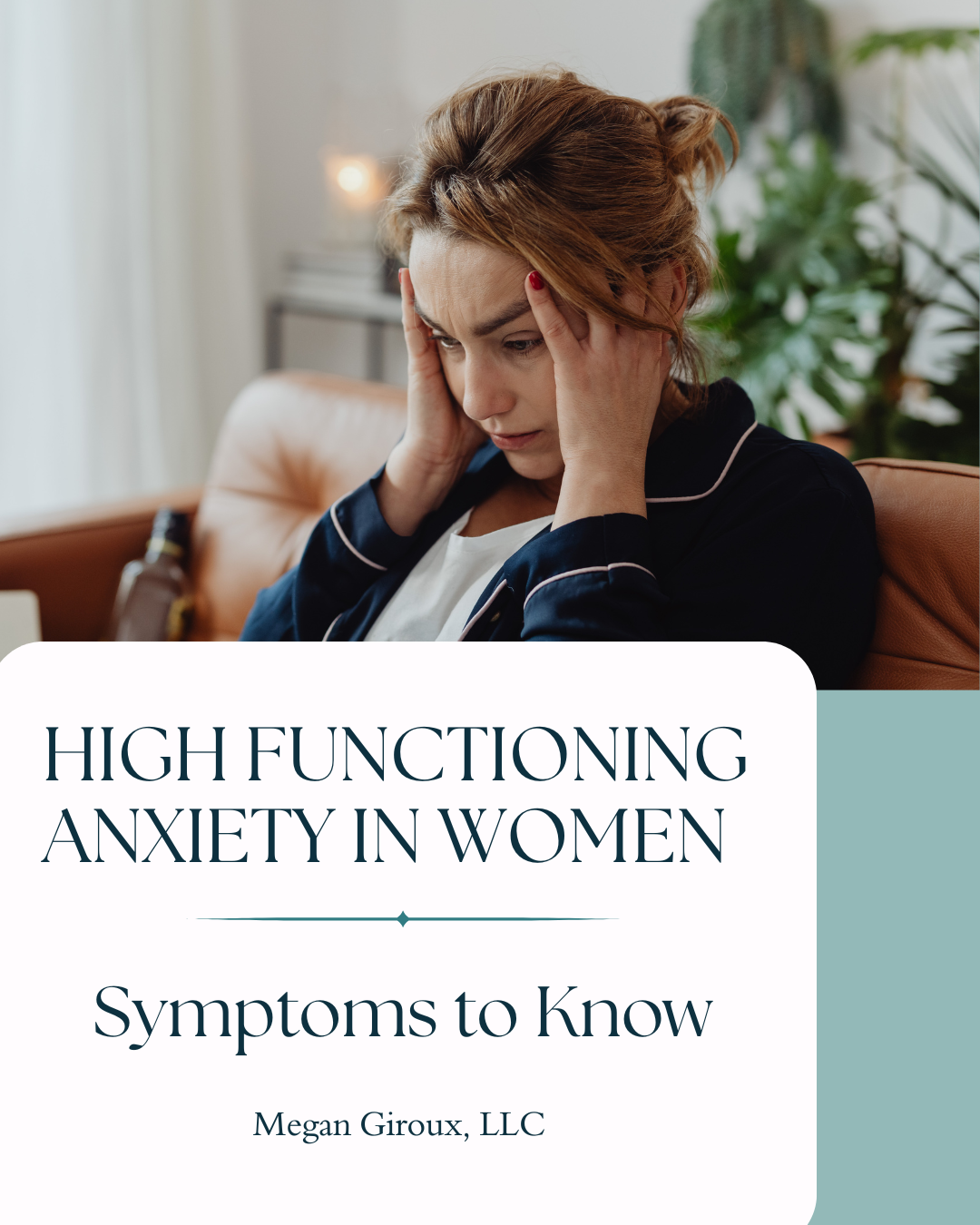
You might not think you have anxiety.
You are capable. You show up. You get things done. People rely on you, and you follow through. From the outside, it looks like you are handling your life well.
But internally, it feels different.
You feel overwhelmed more often than you would like to admit. Your mind does not fully turn off. You are constantly thinking about what needs to be done, what you might be forgetting, or how something could have gone better.
You may find yourself wondering, why does this feel so hard when everything looks fine?
This is often what high-functioning anxiety in women looks like.
If you are unsure whether this applies to you, these are some of the most common signs of high-functioning anxiety that I see in my work with women.
If you want a deeper understanding of how this pattern develops, you can also read my main article on high-functioning anxiety and why it feels like you have to hold everything together.
Common Signs of High-Functioning Anxiety
Many of these symptoms of high-functioning anxiety are easy to overlook because they can look like strengths.
You are constantly thinking about what needs to be done next
You have a hard time relaxing, even when you have time
You replay conversations and overanalyze what you said
You take on more responsibility than is actually yours
You say yes when you want to say no
You struggle to ask for help or delegate
You hold yourself to very high standards
You are highly self-critical, even when things go well
You feel responsible for how other people feel
You push yourself to keep going, even when you are exhausted
Many women read this list and recognize themselves quickly, but still hesitate to call it anxiety because they are still functioning at a high level.
Emotional Signs of High-Functioning Anxiety
The emotional experience of high-functioning anxiety is often what feels the most confusing.
Many women feel a constant sense of overwhelm that never fully goes away. Even when things are under control, there is a lingering pressure that keeps them on edge.
Resentment is also very common. You may feel frustrated with your partner, your children, or the people around you, even though you love them deeply. That frustration can feel confusing or even guilt-inducing.
There is often an underlying dissatisfaction with life that is hard to explain. You may look at your life and think, " This should feel good, so why doesn’t it?
Many women also describe feeling stuck, unmotivated, or disconnected from things they used to enjoy. This can feel especially unsettling when you are used to being productive and driven.
If you want to understand more about where that resentment comes from, you can read more about how resentment builds and what it is actually trying to tell you.
Relational Signs of High-Functioning Anxiety

This is where high-functioning anxiety shows up most clearly, especially for the women I work with.
You may feel responsible for making everything run smoothly in your relationships. This can look like anticipating what your partner or children need without them saying it out loud, or taking on tasks to prevent things from falling apart.
You may struggle to communicate your needs directly. Instead, you handle things yourself, even when you feel overwhelmed or unsupported. Over time, this creates a pattern where you are giving more than you are receiving.
You may start to feel:
Unappreciated
Taken for granted
Frustrated that others are not doing more
Alone in your responsibility
At the same time, it can feel difficult to change this pattern because part of you believes that if you love someone, you should do everything you can for them.
This often leads to overfunctioning, where you take on more than your role in the relationship and slowly lose connection with your own needs.
Physical Symptoms of High-Functioning Anxiety
High-functioning anxiety does not only show up emotionally or mentally. It often shows up in the body as well.
Many women experience physical symptoms that are not always immediately connected to anxiety.
These can include:
Headaches
Stomach issues
Difficulty sleeping
Racing thoughts at night
Muscle tension
Pelvic floor issues
Grinding your teeth
These symptoms are often the body’s way of holding ongoing stress that has not been processed or released.
If you have ever gone to the doctor for these issues and been told everything looks normal, it can feel frustrating and confusing. Understanding the connection between anxiety and physical symptoms can often bring clarity.
Why It Is Hard to Recognize High-Functioning Anxiety
One of the biggest reasons women question, “Am I high-functioning anxiety?” is that they are still functioning.
You are still showing up for your responsibilities. You are still meeting expectations. You are still taking care of the people in your life.
Because of that, it can be easy to dismiss your experience.
There is also often a belief that your struggle is not serious enough to address. If it is not impacting others in an obvious way, it may feel like something you should just push through.
At the same time, slowing down or making changes can feel uncomfortable. It may require setting boundaries, asking for help, or allowing others to step in, which can feel unfamiliar or even risky.
If this resonates, you may also relate to the experience of not being able to fully relax, even when there is nothing wrong.
A Different Way to Understand What You Are Experiencing
If you recognize yourself in these signs of high-functioning anxiety, it does not mean something is wrong with you.
It means you have learned patterns that helped you function, succeed, and care for others, but those patterns may no longer be sustainable.
Many of the women I work with are surprised to learn that their frustration, resentment, and overwhelm are not personal flaws. They are signals.
They are pointing to areas of your life where something needs to shift.
Understanding this is the first step toward change.
What this Means
High-functioning anxiety in women is often hidden behind capability and success.
You can look like you have everything together and still feel overwhelmed, pressured, and disconnected on the inside.
If you have been wondering whether this applies to you, paying attention to these patterns is an important place to start.
You do not have to keep pushing through in the same way.

Author Bio
Megan Giroux, LCSW, is a Licensed Clinical Social Worker in Cary, NC, and the founder of Megan Giroux, LLC. She specializes in anxiety treatment for professional women using Cognitive Behavioral Therapy (CBT), Narrative Therapy, and Motivational Interviewing to help clients reduce overwhelm, strengthen boundaries, and reconnect with themselves. Megan provides in-person therapy at her Cary, NC office and is passionate about helping women move out of survival mode and into lives that feel sustainable and fulfilling.
Learn more about Megan and her counseling services in Cary, NC