High-Functioning Anxiety in Women: Why You Feel Like You Have to Hold It All Together
There is a version of you that everyone else sees.
You are capable, dependable, and thoughtful. You show up for your work, your family, and your responsibilities. You are the one people count on. From the outside, your life looks full and successful.
And yet, on the inside, it feels very different.
Your days are full from the moment you wake up. You are working full-time and then coming home to manage most, if not all, of the household responsibilities and parenting. You want your relationship to feel like a partnership, but instead, you carry the weight of making sure everything runs smoothly. You feel responsible for what needs to be done, even when no one is asking you to take it all on.
You love your life. You love your family. And still, you feel overwhelmed, resentful, and confused about why you are not enjoying the life you have worked so hard to build.
There is a tension you live in every day. You are highly capable, but internally you feel stretched thin, alone in your responsibility, and unsure how to change it.
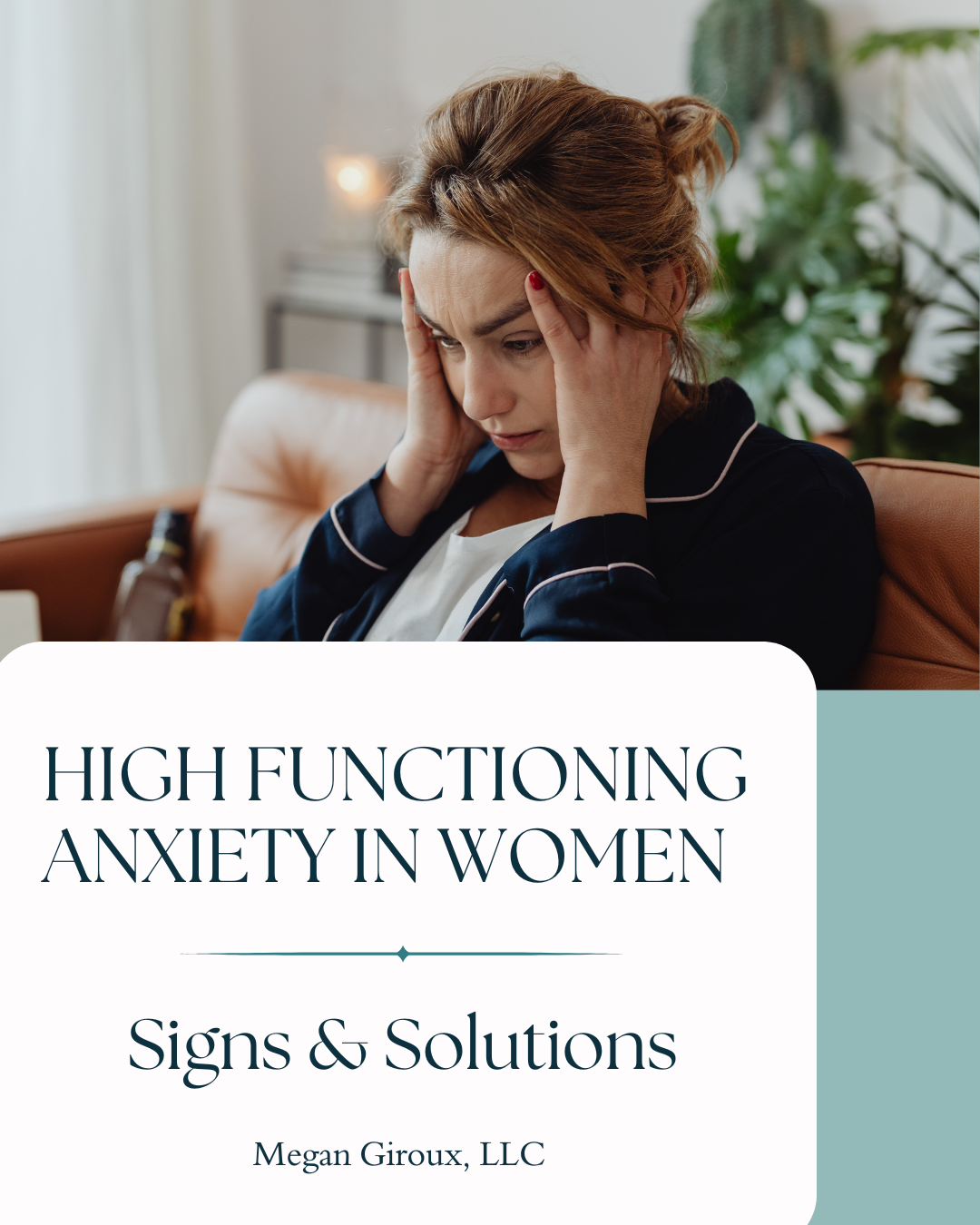
You may not say this out loud, but part of you believes that you have to do everything. You might also recognize that your partner wants to show up, but you are not sure what that would actually look like. Letting go would mean giving up control, and that feels risky.
On a deeper level, this pattern did not start here. You learned early on to be responsible, to perform, to get things right. You learned that you could rely on yourself. So now, even when you are exhausted, it feels safer to keep going than to trust someone else or to slow down.
And slowing down does not feel like relief. It feels like a risk.
If you slow down, you worry that things will fall through the cracks. That your children will be impacted. That you might become lazy or incapable. Even trying to relax can feel more stressful than just continuing to do.
This is often what high-functioning anxiety looks like.
What Is High-Functioning Anxiety?
High-functioning anxiety is when fear becomes your primary motivator instead of a grounded, confident internal voice.
It is not always obvious. In fact, it is often hidden behind competence and success.
Women with high-functioning anxiety tend to appear calm, organized, and put together on the outside. Internally, there is often a constant stream of worry, a critical inner voice, and a pressure to keep everything under control. There is a strong drive toward perfectionism and a tendency to overfunction in relationships and responsibilities.
This type of anxiety does not typically stop you from functioning. It actually keeps you going. It pushes you to show up, perform, and achieve. Because of that, it can be difficult to recognize as a problem.
Unlike more visible forms of anxiety that can interrupt daily life, high-functioning anxiety often looks like success. It gets rewarded. It gets reinforced. And over time, it becomes the way you operate.
When clients begin to recognize this pattern, there is often a moment of confusion.
On the outside, they have been told they have it all together. But internally, they feel overwhelmed, resentful, and disconnected. They start to realize that the way they have been motivating themselves through fear, criticism, and pressure is not sustainable.
The work then becomes shifting from fear-based motivation to something more grounded. Something that allows for confidence, clarity, and a stronger sense of self. For additional examples, check out my deep dive blog on high-functioning anxiety here.
Signs of High-Functioning Anxiety in Women
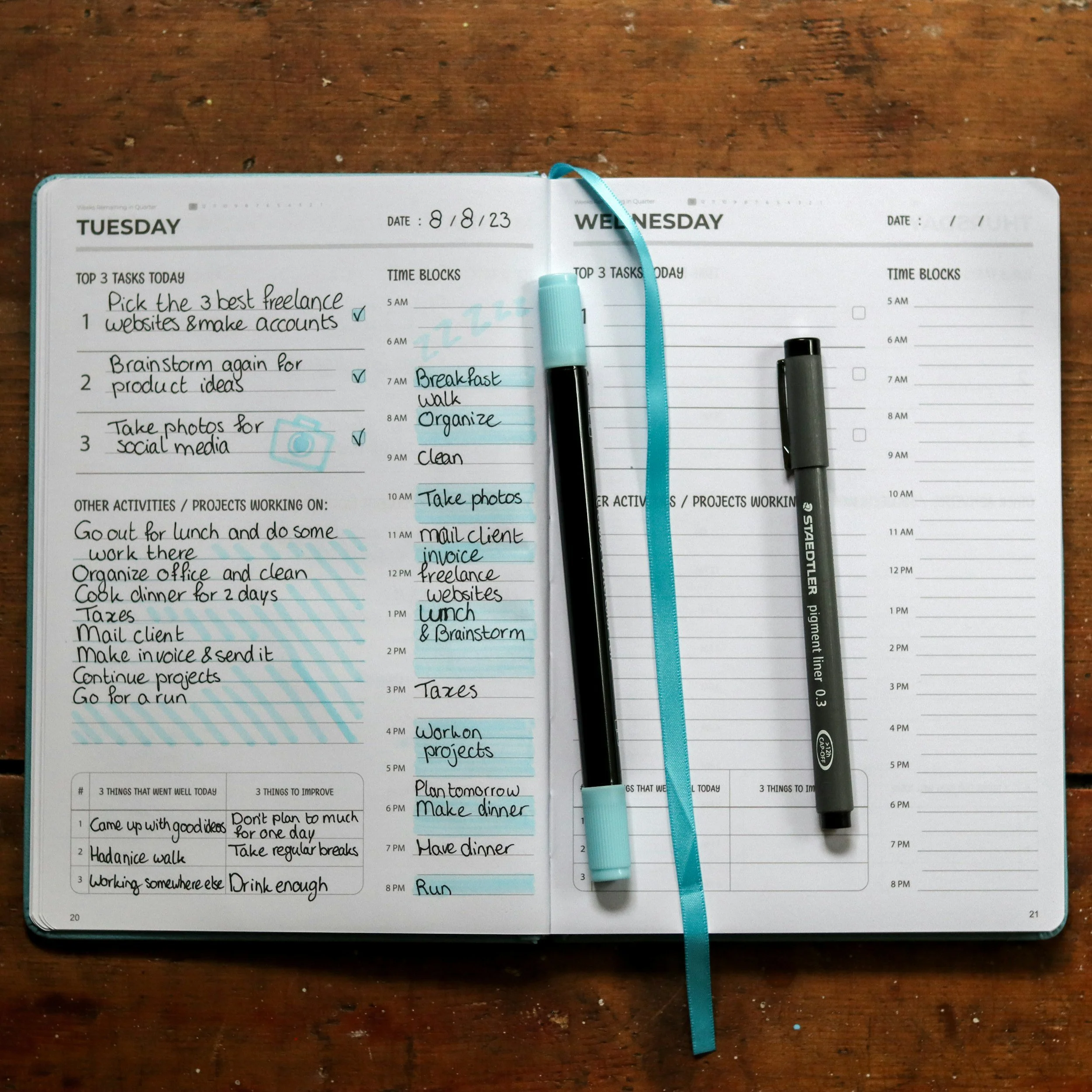
High-functioning anxiety can show up in ways that feel very familiar, even if you have never named it this way before.
Common signs include:
A constant mental to-do list that never fully turns off
Difficulty relaxing, even when there is time to rest
Overthinking conversations and replaying interactions
Taking on more responsibility than is actually yours
Feeling resentful while still saying yes
Struggling to ask for help or delegate
Holding yourself to very high standards and being highly self-critical
Many of the women I work with also describe a deeper emotional experience of overwhelm, resentment, and dissatisfaction with their lives, even when everything looks good on paper.
There are also more subtle signs that often go unnoticed. High-functioning anxiety can show up physically through headaches, stomach issues, pelvic floor tension, or grinding your teeth. These are often the body’s way of holding pressure that never fully releases.
Many of these patterns show up in very specific ways, which I break down more fully in this article on the signs of high-functioning anxiety in women.
Why High-Functioning Anxiety Is So Easy to Miss
Part of what makes high-functioning anxiety so difficult to identify is that it is often rewarded.
Culturally, women receive strong messages about being competent, capable, and selfless. There is an expectation to be successful in your career, present as a parent, supportive as a partner, and emotionally available to others. Much of a woman’s value is tied to what she can do for other people.
When you are meeting all of those expectations, it looks like success.
It also feels uncomfortable to question it. Paying attention to your own needs, wants, or resentment can feel selfish. So instead, you keep showing up for everyone else.
For many women, these patterns started early. Performance may have been a way to receive attention, to create stability in a chaotic environment, or to feel a sense of control. Even if it was not explicitly taught, striving often became associated with safety, connection, or worth.
Those patterns can work well in certain areas of life, especially in school or an early career. But when they carry into adult relationships, parenting, and long-term partnerships, they start to create strain.
What once felt helpful no longer feels sustainable.
The Link Between Anxiety, Control, and Overfunctioning
High-functioning anxiety often leads to a strong need for control.
When you are not fully confident that you can handle things going wrong, controlling situations and outcomes feels safer. Over time, this turns into overfunctioning.
Overfunctioning is when you step outside of your role in a relationship and take on responsibility for things that are not yours. It can look like managing other people’s needs, solving their problems, or anticipating what they need before they even say it.
In relationships, this often shows up as feeling responsible for everything. You may feel like you need to know what your partner needs, take care of it without being asked, and make things easier for everyone around you. This connection between anxiety and control is something I explore more deeply here.
There is often a belief that if you love someone, you should do everything for them.
What is harder to see is that in doing this, you slowly disappear in the relationship.
You may stop expressing your own needs. You may stay silent to keep things running smoothly. Over time, resentment builds because you are giving more than you are receiving, even if no one explicitly asked you to.
This is where many women start to feel the disconnect that brings them into therapy.
Why You Can’t Relax Even When Things Are Fine

Many women with high-functioning anxiety struggle to rest.
It is not just about being busy. It is about what rest represents.
Rest often means that someone else would need to step in. It might mean setting a boundary, asking for help, or allowing something to be done differently than you would do it. That can feel uncomfortable or even unsafe.
There is also an internal narrative that slowing down means you are lazy, incapable, or failing in some way.
Even when there is time to rest, your mind stays active. You are thinking about what needs to be done, what could go wrong, or what you might be forgetting. Your nervous system stays activated, even when your body is still. This type of anxiety often shows up most clearly in the inability to relax, even when nothing is wrong.
Over time, being the reliable one becomes part of your identity. Letting go of that, even slightly, can feel like losing a part of who you are.
The Hidden Cost of High-Functioning Anxiety
High-functioning anxiety is not sustainable.
Emotionally, it leads to exhaustion, resentment, and a growing sense of disconnection from yourself. You may feel like you are moving through your life without actually experiencing it.
Relationally, it creates patterns that are difficult to maintain. You may feel unappreciated, dismissed, or like your needs do not matter. There can be a buildup of resentment that is not being expressed.
Physically, the impact often shows up over time. Headaches, sleep difficulties, and ongoing tension in the body are common signs that something is not working.
If these patterns continue, the cracks usually start with physical health, then show up in relationships, and eventually impact your sense of identity.
You can find yourself questioning who you are outside of your roles as a professional, partner, or parent.
And often, this happens while you are still doing everything you are supposed to be doing.
How to Start Breaking the Pattern
Change does not start with doing more. It starts with noticing.
The first shift I help clients make is learning to tune into their own thoughts and feelings instead of automatically focusing on everyone else’s. Many women are highly skilled at reading the room, but disconnected from what is happening internally.
From there, we begin to notice where overfunctioning is happening and what it is costing.
This work is not about immediately setting perfect boundaries or silencing the critical voice. It is about understanding where these patterns came from and recognizing that they were learned. If something was learned, it can also be unlearned.
There is often discomfort in doing less, speaking up, or allowing others to step in. That discomfort is part of the process, not a sign that you are doing something wrong.
Sustainable change happens when you begin to develop a more grounded internal voice that is not driven by fear or pressure.
When to Consider Therapy

You do not have to be in crisis to start therapy.
Many of the women I work with feel a disconnect between how their life looks on the outside and how it feels on the inside. There is often a sense that something is off, even if they cannot fully explain it.
My work focuses on identifying the patterns that were learned early and understanding which ones are still serving you and which ones are not. We look at the root of these patterns so that the changes you make are meaningful and sustainable.
This is not about quick fixes or surface-level strategies. It is about understanding why you learned to quiet your own voice and what it looks like to reconnect with it.
When we do this work, it often shows up across all areas of life. The same patterns that exist in relationships also show up in work, parenting, and decision-making.
Helping women unlearn high-functioning anxiety and develop a more grounded way of operating is deeply transformative.
Sound Familiar?
If you see yourself in this, you are not alone.
Many women are holding everything together because they feel like they have to. They are capable, driven, and deeply invested in the people they care about. And they are also tired.
You may have been operating this way for a long time. It makes sense that it feels normal, even if it is not working anymore.
There is another way to move through your life. You can still be capable and driven, but not at your own expense. You can build relationships that feel like partnerships. You can feel more connected to yourself and more present in your life.
You are already important. You do not have to earn care or consideration by proving yourself. If you are starting to wonder what it would look like to function in a different way, this article walks through how to slow down without feeling like you are falling behind.
Next Steps
Considering therapy is a big step, and it is important to feel comfortable with who you are working with.
I offer a free 20-minute video consultation where we can talk through what is bringing you in, answer your questions, and see if working together feels like a good fit. Having that initial conversation often makes it easier to move forward because you already have a sense of what it will feel like to work together.
If you are ready to explore this work, you can schedule a consultation or learn more about working with me.

Author Bio
Megan Giroux, LCSW, is a Licensed Clinical Social Worker in Cary, NC, and the founder of Megan Giroux, LLC. She specializes in anxiety treatment for professional women using Cognitive Behavioral Therapy (CBT), Narrative Therapy, and Motivational Interviewing to help clients reduce overwhelm, strengthen boundaries, and reconnect with themselves. Megan provides in-person therapy at her Cary, NC office and is passionate about helping women move out of survival mode and into lives that feel sustainable and fulfilling.
Learn more about Megan and her counseling services in Cary, NC