What Is High-Functioning Anxiety? A Clear, Real-Life Explanation
There are many women who look like they are managing life well on the outside, but internally, something feels off.
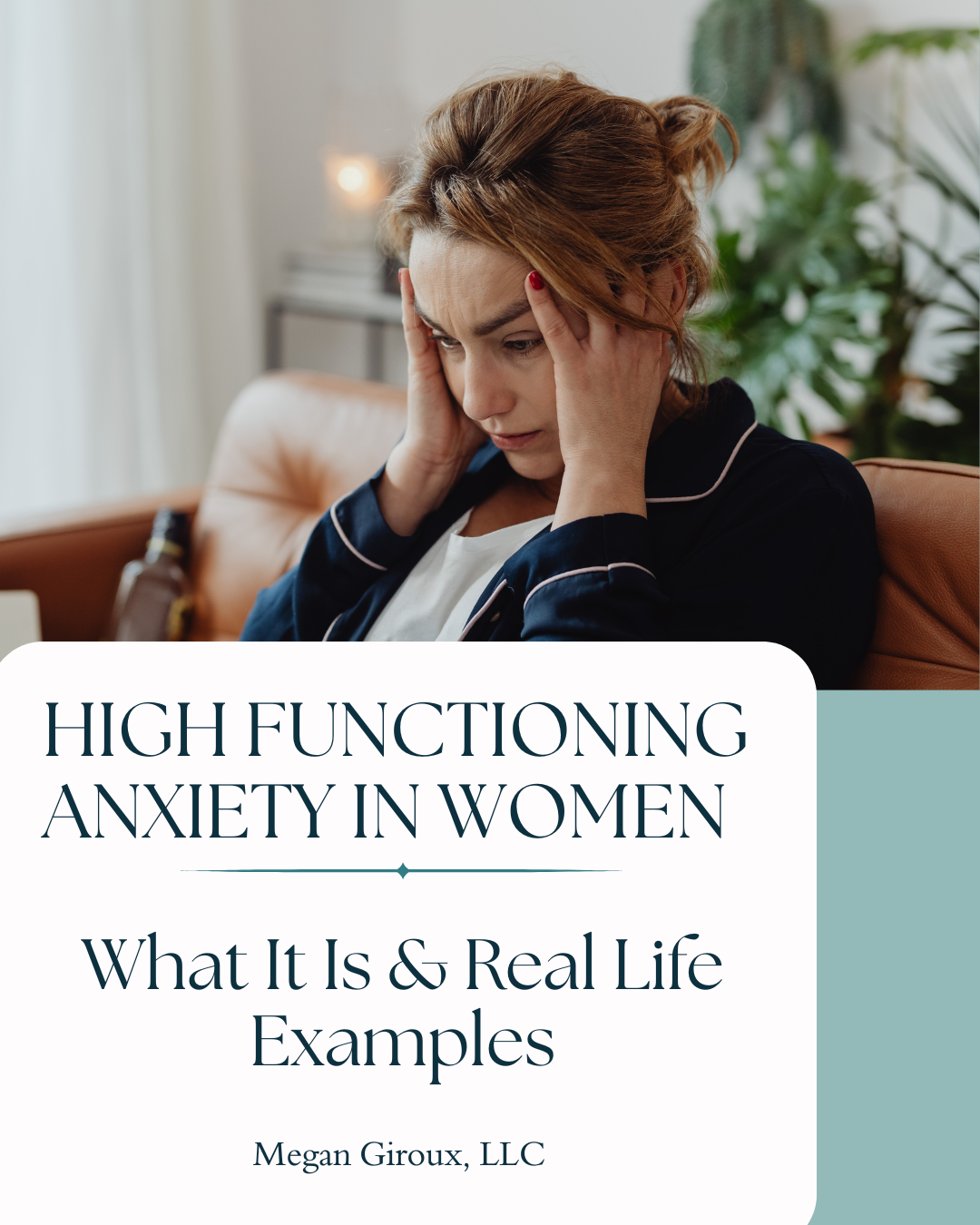
They may not describe themselves as anxious. In fact, they often say they are just overwhelmed, stuck, unmotivated, or frustrated that they are not as productive as they used to be. There is a sense that life should feel easier than it does, especially because from the outside, things look good.
Many of my clients describe feeling like they are failing, not because anything is clearly wrong, but because their experience of life does not match what they believe it should feel like. If you are starting to wonder whether what you are experiencing is more than just stress or overwhelm, you may also want to read my main article on high-functioning anxiety and why it feels like holding everything together all the time: High-Functioning Anxiety in Women: Why You Feel Like You Have to Hold It All Together
There is often confusion about why they are not enjoying the life they have worked so hard to create. Instead of feeling satisfied, they feel angry, resentful, or disconnected from the people they love most.
What feels “off” is often harder to name.
Some women notice they cannot shut their mind off at night. Sleep feels difficult or inconsistent. There may be trouble remembering things, focusing, or feeling motivated. Things that used to feel enjoyable now feel flat or out of reach.
Others notice physical symptoms that have not been explained medically. Headaches, stomach issues, and ongoing tension in the body often show up alongside emotional overwhelm.
What makes this even more confusing is that the struggle does not always seem disruptive enough to justify attention. It does not feel like it is impacting other people in obvious ways. Because of that, many women dismiss it or minimize it.
There is often an internal belief that addressing it would be selfish or would create problems for others. It can feel like speaking up about their own needs would lead to disappointment, frustration, or conflict in their relationships. So instead, they keep going.
What Is High-Functioning Anxiety?
High-functioning anxiety is when someone experiences significant anxiety internally but continues to function at a high level externally.
Instead of shutting down or withdrawing, the response is to work harder, push through, and maintain the appearance of being fine. This is often driven by a strong internal pressure to keep everything together and a self-critical voice that is constantly evaluating performance.
Unlike being simply driven or responsible, high-functioning anxiety is rooted in fear. The focus is often on how others might perceive you. There is a fear of being seen as incompetent, failing, or letting people down.
These patterns are not random. They are often learned early in life through environments where performance, achievement, or caretaking were rewarded with attention, approval, or emotional stability.
What drives this pattern underneath is fear. Fear of failure. Fear of disappointing others. Fear of being seen as not enough. Alongside that fear is a critical internal voice that keeps pressure constantly present.
This is a very difficult way to live, because motivation comes from pressure instead of grounded self-trust.
What High-Functioning Anxiety Looks Like in Real Life
For many women, a typical day looks like giving everything they have at work and then continuing to give everything they have at home.
Work does not end when the workday ends. Tasks often spill into the evening or early morning hours, done at times that feel least disruptive to others. Many women wake up early or stay up late just to keep up.
At the same time, these women are often deeply thoughtful, responsible, and caring. They are the ones others rely on. They prioritize the needs and struggles of those around them and are often praised for being dependable, compassionate, and selfless.
On the outside, this is seen as a strength. It is often admired and appreciated by others.
Internally, however, there is a very different experience happening.
There is a constant pull to attend to everyone else’s needs, even at the expense of their own. This can look like skipping meals to make sure others are taken care of, working through lunch to be available for clients or colleagues, or staying up late to respond to messages so no one feels unattended to.
Over time, this creates an internal conflict. There is a deep value placed on caring for others, but also a growing exhaustion and resentment that comes from never getting to attend to themselves.
Needs begin to feel like something that should be minimized or eliminated altogether. Rest, boundaries, and personal space can feel selfish or unnecessary.
High-Functioning Anxiety vs Regular Anxiety
Many people come to therapy thinking anxiety only means feeling stressed or worried in a way that interrupts daily life.
Because of this, they often overlook symptoms they are already experiencing. Difficulty making decisions, constant overwhelm, inability to relax, and ongoing worry are frequently dismissed as just personality traits or signs of being busy.
Another common misunderstanding is around emotions like anger and resentment.
Many women do not initially connect these feelings to anxiety. Instead, they interpret anger, frustration, or resentment as personal flaws. They assume something is wrong with them for feeling this way. I go into more depth about how high-functioning anxiety shows up differently in daily life in my main article, High Functioning Anxiety in Women.
What often surprises them is learning that these emotions are actually important signals. They are indicators that something in their life is not aligned or sustainable.
Instead of being problems to eliminate, these feelings often point toward unmet needs, unrealistic expectations, or patterns that need to change.
Many clients initially come in wanting help to stop feeling anxious, angry, or resentful. Over time, they begin to understand that these feelings are not the problem. They are information.
The real work becomes understanding what is driving them and making changes that allow those feelings to decrease naturally, rather than trying to suppress them.
Why High-Functioning Anxiety Often Goes Unnoticed
High-functioning anxiety is often missed because it is reinforced by the people around you.
Many women hear consistent messages like “we could not do this without you” or “you are the only one who keeps everything together” or “you are the best person for this job.” These statements are meant as praise, and they often feel like confirmation of worth.
Over time, this reinforces the belief that value comes from doing, giving, and showing up for others.
As this continues, expectations from others often grow alongside it. The more someone proves they can handle, the more they are expected to handle.
At the same time, it becomes harder to question this dynamic. If you are the person everyone relies on, shifting that role can feel risky. There may be fear of disappointing others or being seen differently.
For many women, there is also a deeper belief that they do not actually have needs, or that their needs are less important than others. Even people who care about them may begin to operate from this assumption.
What Is Actually Driving High-Functioning Anxiety
At the core of high-functioning anxiety is a set of deeply learned beliefs about worth and responsibility.
Many women learned early in life that striving led to positive attention, approval, or emotional stability. Performance became connected to safety and connection.
Because of this, there is often a fear that if they stop pushing themselves, they will be seen as lazy or incapable. There is also a fear that they should be able to handle everything required of them as a mother, partner, professional, or adult daughter.
Disappointing others can feel especially intolerable. Many women learned early on that disappointing others led to disconnection or conflict, so they learned to avoid it at all costs.
Underneath these patterns is the belief that worth is based on output. That being selfless makes you valuable. That having needs is weakness. That needing others is risky or vulnerable.
There is also often a belief that if they perform correctly, they can influence how others respond to them. This creates a focus on managing other people’s reactions rather than attending to their own internal experience.
Why It Does Not Feel Like a Problem at First
High-functioning anxiety often feels effective in the beginning.
These patterns lead to success in many areas of life. They help people excel in their careers, care deeply for their families, and maintain strong outward appearances of stability and reliability.
Because it works, it is difficult to question.
There is also a strong fear of what might happen if things change. Many women worry about how others would respond if they stopped striving at the same level or began setting limits.
Over time, however, this way of functioning becomes exhausting. It stops feeling sustainable.
There is often a disconnect between how life looks from the outside and how it feels on the inside. Even when everything appears to be going well, internally it feels heavy, pressured, and unfulfilling.
Many women find themselves thinking they love their life but do not actually feel like they are enjoying it.
When High-Functioning Anxiety Starts to Catch Up
For many women, this pattern eventually becomes impossible to maintain at the same level.
Physical symptoms often show up first. Headaches, stomach issues, sleep difficulties, and exhaustion become harder to ignore. Many women seek medical answers, but nothing fully explains what they are experiencing.
At this stage, some are referred to therapy by physicians or encouraged by colleagues who notice similar struggles.
Emotionally, there is often growing frustration and resentment. This can show up in relationships with partners or children. Many women deeply love their families, but feel overwhelmed, unappreciated, or irritated by the constant demands placed on them.
There is often confusion about this experience. They know their loved ones are not the problem, but they do not know how to change how they feel.
This is often what brings people into therapy. Not a single crisis, but a growing awareness that something is no longer sustainable. If this is starting to resonate, my main article walks through how these patterns develop and why they are so often missed.
A Different Way Forward
The first shift that often happens in therapy is learning to relate to yourself with more kindness and curiosity instead of self-criticism.
Many women begin to see that their frustration, resentment, and anger are not character flaws. They are signals. They are pointing to something that needs attention and care.
Real change does not come from simply trying to feel differently. It comes from understanding the patterns, beliefs, and experiences that created this way of functioning in the first place.
When those patterns are understood, they can be changed in a sustainable way.
A more grounded way of living involves becoming more aware of your own internal experience, rather than constantly prioritizing everyone else’s. It means learning to notice your needs, honor them, and make decisions from that place.
As this shift happens, women often find they are more present in their relationships and more connected to their own lives. There is less striving and more stability. Less fear and more clarity.
Next Steps…
If you recognize yourself in this, you are not alone.
Many women are living in this pattern of high-functioning anxiety while believing they should be able to handle more, do more, and feel better than they do.
The truth is that your worth is not something you have to earn through performance or self-sacrifice. These beliefs were learned, and they can be unlearned.
You do not have to continue pushing through in a way that leaves you exhausted, resentful, and disconnected from yourself.
You are already important. You do not have to prove that in order to be deserving of care, consideration, or support.
If this resonates with you, you do not have to figure it out alone.
I offer a free 20-minute consultation where we can talk through what is bringing you in, answer your questions, and explore whether working together feels like a good fit. This is a no-pressure conversation designed to help you feel informed and comfortable before starting therapy.
You can reach out through my website to schedule a consultation and take the next step when you are ready.

Author Bio
Megan Giroux, LCSW, is a Licensed Clinical Social Worker in Cary, NC, and the founder of Megan Giroux, LLC. She specializes in anxiety treatment for professional women using Cognitive Behavioral Therapy (CBT), Narrative Therapy, and Motivational Interviewing to help clients reduce overwhelm, strengthen boundaries, and reconnect with themselves. Megan provides in-person therapy at her Cary, NC office and is passionate about helping women move out of survival mode and into lives that feel sustainable and fulfilling.
Learn more about Megan and her counseling services in Cary, NC